
In extended tactical, disaster relief, or high-pressure professional operations, fatigue is not just an inconvenience—it’s a fundamental threat to cognitive function, decision-making, and safety. A degraded mind and body cannot perform at peak efficiency. Managing fatigue during long operations is a critical, disciplined skill that moves beyond simply wanting to be less tired. It involves strategic planning, scheduled rest, and chemical management to sustain peak performance when the mission demands it most.
Phase 1: The Strategic Defense (Before the Fatigue Hits) ⚙️
Fatigue management must begin before the operation starts, not when you hit the wall.
- Bank Sleep (The Prep): The few days leading up to an extended operation are crucial. Get as much quality sleep as possible (8-10 hours). While you can’t “store” sleep, being fully rested gives you a better baseline before inevitable sleep deprivation begins.
- The Power Nap Plan: Integrate short, strategic naps into the mission plan. A 20- to 30-minute power nap can restore alertness and cognitive function significantly without inducing the heavy grogginess of deep sleep (sleep inertia). When possible, cycle personnel through these short rest periods.
- Micro-Breaks: Implement mandatory, short breaks (5 minutes) every 60-90 minutes. Use this time to stretch, look at the horizon (to rest your eyes), and move your body. Breaking the concentration cycle prevents mental burnout.

Phase 2: Chemical and Physical Management (In the Moment) 💊
When sleep is impossible, you rely on chemical and physical interventions to maintain operational tempo.
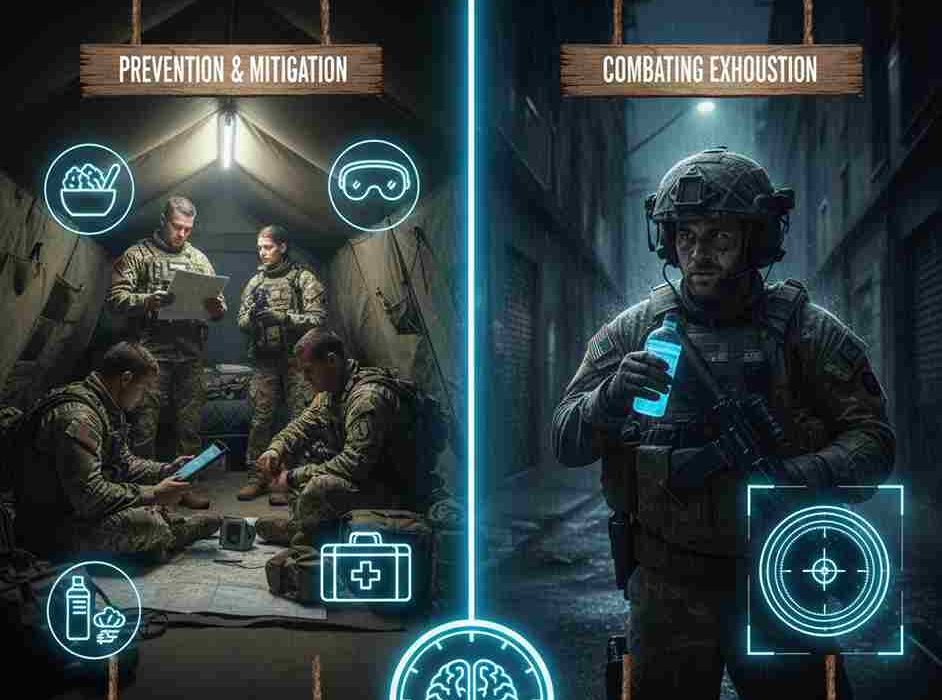
- Hydration is Key: Dehydration is a massive contributor to fatigue and cognitive fog. Ensure a constant, measured intake of water. Don’t wait until you’re thirsty. Electrolyte solutions are essential, especially in high-heat or high-exertion environments.
- Fuel Management (Steady Energy): Avoid large, sugar-heavy meals that cause energy spikes and crashes. Focus on small, frequent, complex carbohydrate and protein snacks (nuts, energy bars, jerky) to maintain stable blood sugar and sustained energy.
- Strategic Caffeine Use: Caffeine is a powerful tool, but it must be used strategically. Do not consume caffeine constantly, as this builds tolerance and diminishes its effect. Reserve it for critical periods when peak performance is absolutely necessary. Always pair it with water to combat dehydration.
- Sensory Shock: When alertness dips, use sensory changes to “reset” the brain. This can include splashing cold water on the face, intensely chewing gum, or engaging in a short, brisk physical activity.
Phase 3: The Mental Reset (Cognitive Discipline) 🧠
Fatigue often manifests as mental fog, impatience, and degraded decision-making.
- Controlled Breathing: Use deep, controlled breathing (like the 4-7-8 method) to activate the parasympathetic nervous system. This reduces muscle tension and provides a brief mental break, acting as a cognitive reset button.
- Re-Verification: Fatigue dramatically increases the chance of making simple errors. Implement a mandatory double-check or buddy-check system for all critical tasks, such as navigation, equipment checks, and radio reports.
- The Hand-Off: When fatigue becomes critical, the safest action is to temporarily delegate a critical task to a rested teammate, even if you are the senior person. Recognizing your own operational limit and communicating it is a sign of disciplined leadership, not weakness.
Managing fatigue is a relentless battle against your own biology. By treating rest and replenishment as mission-critical tasks, you can ensure that you and your team maintain the necessary sharpness to survive and succeed under extended pressure.