
In high-risk environments, moving from point A to point B in a vehicle is often the most dangerous part of the mission. A vehicle, while providing speed and some protection, is also a highly constrained target, making a convoy a prime candidate for an ambush. Effective vehicle tactics are not about sheer firepower; they are about disciplined movement, clear communication, and a well-rehearsed, explosive response that allows the team to fight through the kill zone and maintain momentum.
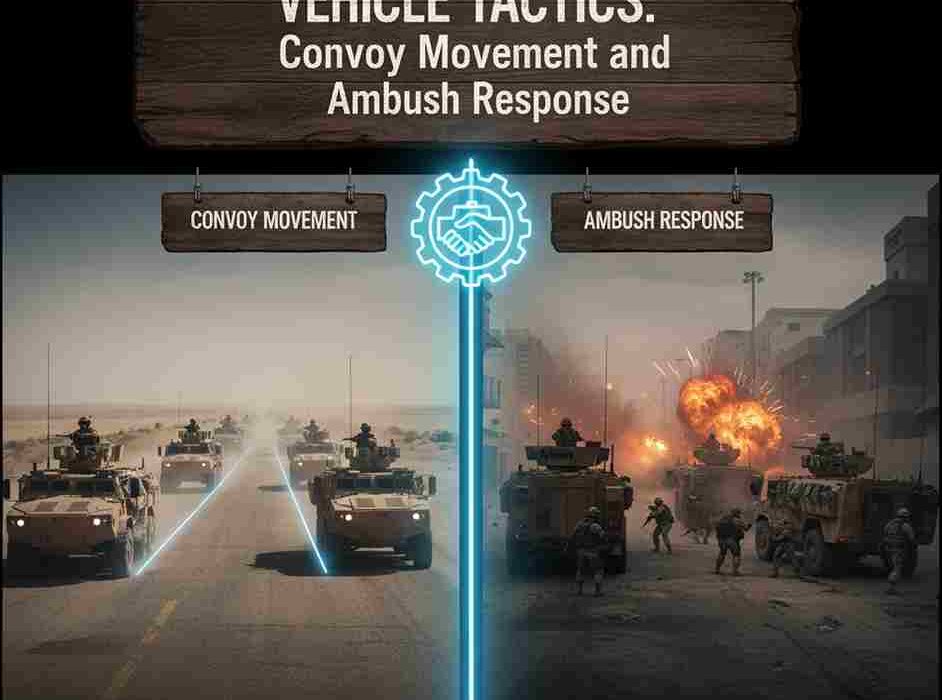
Part 1: Convoy Movement Discipline (The Best Defense) 🚗
The best way to survive an ambush is to avoid one entirely, or at least, be prepared to mitigate its effects.

1. Vehicle Selection and Preparation
- Hardened Vehicles: Use armored or up-armored vehicles whenever possible. If armor isn’t an option, use the heaviest, most reliable vehicles available.
- Minimize “Soft Spots”: Ensure all windows are up and doors are locked. Interior gear should be secured to prevent projectiles during impact or sudden maneuvering.
- Pre-Route Inspection: Every vehicle must be checked for maintenance issues, and fuel tanks should be topped off.
2. Formation and Spacing
- The Best Formation: A staggered or column formation is generally preferred, as it allows all vehicles to have a clear line of sight and fire.
- Crucial Spacing: Maintain appropriate spacing. Too close, and a single IED or RPG can disable two vehicles. Too far, and communication and mutual support are compromised. A typical rule of thumb is to maintain a distance that allows the vehicle behind you to stop safely, but not so close that they are trapped by your immobilization.
- Lead and Trail Vehicles: The lead vehicle sets the pace and is often the first to absorb an attack. The trail vehicle must be the most disciplined, as its primary role is to secure the rear and provide suppressive fire for the rest of the convoy’s exit.
3. Communications
- Standardized Calls: All communication must be brief, clear, and standardized. Use codes or brevity words for reporting threats (e.g., “Contact Left!”) or vehicle status (“Vehicle 2 is down!”).
Part 2: Ambush Response (Fight Through the Kill Zone) 🔥
When an ambush hits, the first few seconds determine the outcome. The initial action must be aggressive and immediate, executed on instinct.
1. The Immediate Action Drill (IAD)
The golden rule is Fight Through, Do Not Stop. Stopping a convoy in the kill zone turns it into a stationary firing range.
- Immediate Suppression: Every able-bodied person must immediately return fire in the direction of the threat, focusing on the muzzle flashes or known enemy positions. This suppresses the enemy and allows the driver to maneuver.
- The Driver’s Role: The driver’s single priority is to accelerate hard and fast out of the kill zone, following the lead vehicle. The driver is fighting the vehicle; the passengers are fighting the enemy.
- Maneuver and Communication: The lead vehicle communicates the direction of travel (e.g., “Exit North!”). Vehicles must aggressively maneuver to block avenues of attack, creating cover for others if necessary, but never stop their forward momentum in the kill zone.
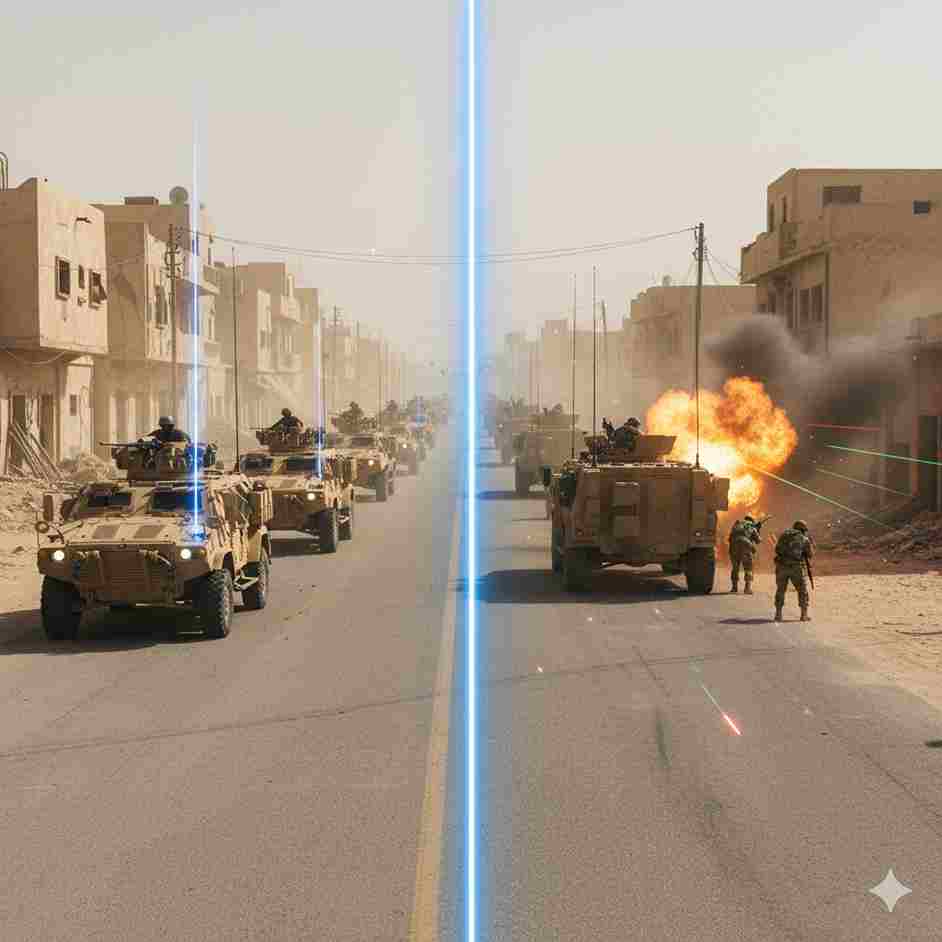
2. If a Vehicle is Disabled (The Breakaway)
If a vehicle is disabled in the kill zone, the following protocol is immediate:
- Security and Fire: Personnel in the disabled vehicle immediately establish 360-degree security and lay down heavy suppressive fire.
- Rescue Vehicle: The nearest functioning vehicle (often the trail vehicle or the one immediately behind) must stop out of the immediate kill zone and provide cover while the occupants of the disabled vehicle evacuate and are extracted.
- Evacuate and Consolidate: The goal is to quickly pull the crew and any critical equipment from the disabled vehicle and consolidate them into the remaining vehicles, then immediately continue to an established rally point outside of the threat area.
Vehicle tactics boil down to maintaining aggressive momentum and mutual support. By adhering to disciplined movement and rehearsing a violent, immediate response, a convoy can quickly transition from a vulnerable target to a mobile fighting force.