

An ambush is a surprise attack from a concealed position on a moving or temporarily halted enemy. It’s a tactic of pure discipline and controlled aggression, where every action is pre-planned and executed with precision.
The core principle of an ambush is to force a decisive confrontation on your own terms. You choose the time, the place, and the moment of the attack, giving the enemy zero time to react.
The Three Tactical Phases of an Ambush
A successful ambush isn’t just a random attack. It follows a meticulous, three-phase plan.
1. The Setup: Preparation is Everything
This is the most critical phase, and it’s all about intelligence and positioning.
- Reconnaissance: Before anything else, you must study your enemy. Know their route, their speed, and their patterns. This is all about anticipating their movements.
- Site Selection: Choose your kill zone wisely. The ideal spot is a natural chokepoint or a place where the enemy is forced to slow down, like a narrow pass, a blind corner, or a river crossing. You want to make sure your position provides cover and concealment.
- Establishment: Set up your teams in a V-shaped or L-shaped formation to trap the enemy from multiple sides. Crucially, you must also establish clear escape routes. An ambush is designed for a quick attack and withdrawal, not a prolonged firefight.
2. The Attack: Surprise and Violence
This is the moment of truth. The attack is sudden, brutal, and designed to disorient the enemy immediately.
- The Signal: A pre-arranged signal (like a whistle, a loud bang, or a flare) triggers the attack for all teams at the exact same moment.
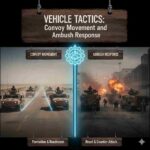
- Concentrated Fire: The initial assault must be a massive concentration of firepower on the most vulnerable target, often the lead and trailing vehicles in a convoy, to trap them in the kill zone.
- Focus: The focus is on overwhelming the enemy in the first few moments, not on engaging in a drawn-out battle.

3. The Withdrawal: Discipline is Paramount
This is the most dangerous phase. A poorly executed withdrawal can turn a successful ambush into a disaster.
- The Signal: A clear signal for withdrawal is given, and all teams pull back to their pre-planned escape routes immediately.
- Leave Nothing Behind: You never leave your gear, your wounded, or your dead.
- Rendezvous Point: All teams move to a pre-planned rally point, where they regroup, assess the situation, and plan their next move.
The Bottom Line: An ambush is a tactical masterpiece that relies on discipline and preparation. It’s not about fighting harder; it’s about fighting smarter. The key is to avoid confrontation until you’ve gained a tactical advantage that makes your success almost certain.