
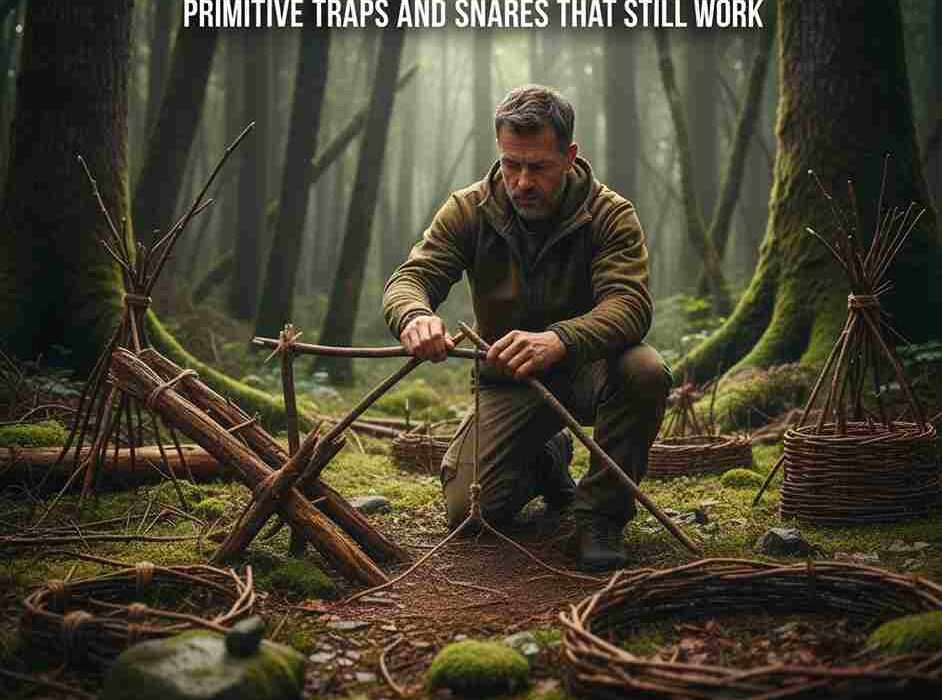
In a true wilderness survival scenario, energy is the single most valuable resource. Actively hunting with a weapon or chasing game expends massive amounts of energy. The tactical advantage of a primitive trap or snare is that it allows the survivor to become a passive hunter, conserving calories while the trap does the work.
These methods rely on intimate knowledge of animal behavior and are designed to exploit natural pathways and instincts. Note: The use of traps and snares is highly regulated and often illegal in most jurisdictions. This information is for educational purposes on ancient survival techniques only.
1. ⚙️ The Core Principle: Exploiting the Funnel
The success of any trap is 90% placement and 10% construction. Primitive traps succeed by placing a killing mechanism on a path the animal must use.
A. Identification of Runways
Animals, particularly small game like rabbits, squirrels, and rodents, are creatures of habit. They consistently use the path of least resistance:
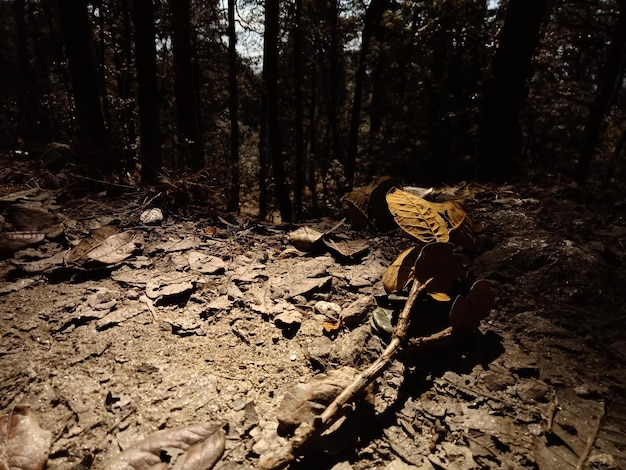
- Natural Funnels: Look for narrow gaps in dense brush, fallen logs bridging two points, small gaps under fences, or tunnels leading to and from a food source.
- Sign: Identify runways by looking for matted-down grass, droppings, and small amounts of hair caught on low-hanging vegetation.
B. The Funneling Technique
Once a runway is found, use natural materials (rocks, branches, thorns) to slightly narrow the path, forcing the animal to pass directly over or through the specific spot where the trap is set.
2. 🪢 The Silent Killer: Snare Construction
Snares are the most common and simple passive hunting technique. They use a loop of cordage placed in a runway to capture the animal.
A. The Basic Wire Snare (The Necessity)
While cordage from natural fiber can be used, a thin, pliable metal wire (like copper or brass wire from discarded electronics) is far more effective and less likely to be chewed through.
- The Loop: Create a small loop (appropriate for the target animal’s head size—about the size of a fist for a rabbit) and secure the cordage to a fixed point (a thick log or stake) outside the runway.
- The Placement: Suspend the loop so that the bottom of the loop sits about $1-2$ inches above the ground. The loop must be positioned perfectly in the center of the runway so the animal cannot step around it.
- The Snare Line: The wire should be angled slightly away from the direction the animal is likely traveling, allowing its head to slip in smoothly.
B. The Twitch-Up Snare (The Deadfall Principle)
This more advanced snare uses the tension of a bent sapling to instantly pull the captured animal into the air, preventing it from escaping or being preyed upon by other animals.
- Mechanism: Requires a spring pole (a thin, bent sapling), a trigger stick (toggle), and a cordage loop.
- Action: When the animal triggers the toggle by passing through the loop, the sapling instantly springs back up, hoisting the animal into the air. This kills the animal quickly and lifts it out of reach of scavengers.
3. 🪨 The Pressure Trap: Deadfall Construction
The Deadfall is a heavy-weight trap designed to crush small to medium-sized game instantly. It is simple to construct but requires perfect balance.
- The Principle: A very heavy rock or log is supported by a delicate, three-piece trigger mechanism (often called the figure-four or the “teeter-totter” trigger).
- The Bait: Bait (berries, nuts, or a piece of plant bulb) is tied or attached to the release stick.
- The Action: When the animal tugs or disturbs the bait, the delicate trigger mechanism collapses, causing the heavy deadfall weight to drop directly onto the prey.
4. 📝 The Survivor’s Creed: Ethics and Law
Survival skills require responsible application.
- Prioritize Placement: Set multiple traps in multiple locations. The odds are always stacked against you. Do not rely on a single trap.
- Check Frequently: Traps should be checked at least once in the morning and once in the evening. Leaving an animal in a trap causes unnecessary suffering and can lead to the loss of meat due to spoilage or scavengers.
- Legality: ALWAYS check local, state, and national laws. In nearly all areas, setting snares and traps without specific licenses, or in non-hunting seasons, is illegal and carries severe penalties.
Mastering these ancient, silent tactics is a hallmark of the prepared survivor, but always prioritize safety, legality, and humane practice.