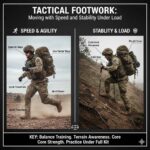

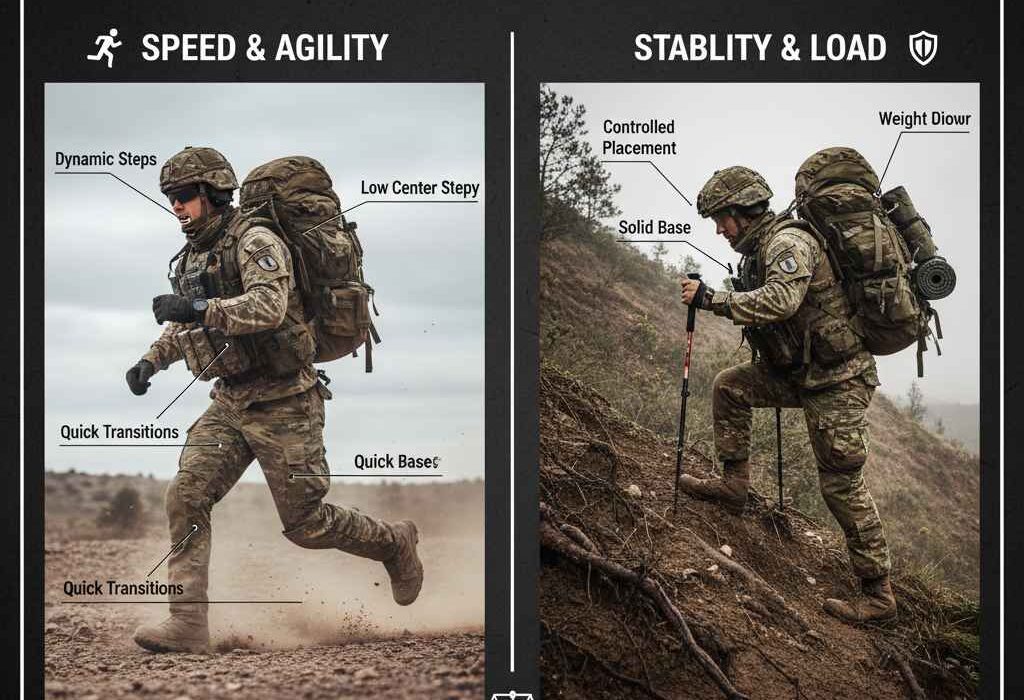
Moving fast while carrying kit is more than being strong — it’s balance, mechanics, conditioning, and practiced technique. Whether you’re on patrol, bugging out, or pushing through obstacles, good footwork keeps you stable, efficient, and deadly effective. This guide breaks down the why, the how, the drills, and the mistakes to avoid.
Why Footwork Matters (More Than You Think)
- Energy efficiency: Proper mechanics use less energy — critical when wearing body armor and carrying weight.
- Injury prevention: Poor foot placement and technique lead to twisted ankles, knee strain, and lower-back problems.
- Speed with control: Quick movement that’s sloppy gets you stuck; controlled speed gets you where you need to be.
- Tactical advantage: Positioning (angle, cover use, approach) often decides outcomes before firing a round.
In short: movement is a weapon. Train it like one.
The Fundamentals: Biomechanics & Principles
1. Base of Support
- Keep your feet roughly shoulder-width for stability.
- When moving downhill or carrying heavy loads, widen your base slightly to lower center of gravity.
2. Center of Gravity
- Keep weight close to your body—pack high and tight, heavy stuff centered near your spine.
- Bend knees and hips; squat slightly when moving to lower your center of gravity and absorb terrain changes.
3. Foot Strike
- Aim for mid-foot to forefoot strikes when moving quickly; heel-first walking wastes energy and increases braking forces.
- For stealth/crawling, use slow, flat-footed steps to minimize noise and silhouette.
4. Stride Length & Cadence
- Shorter, faster steps are more stable when carrying weight — long strides increase torque and chance of trip.
- Keep cadence consistent; higher cadence with shorter steps improves control over rough ground.
5. Load Transfer
- Learn to move as a single unit — head, chest, and hips aligned. Avoid torso twisting that throws off balance.
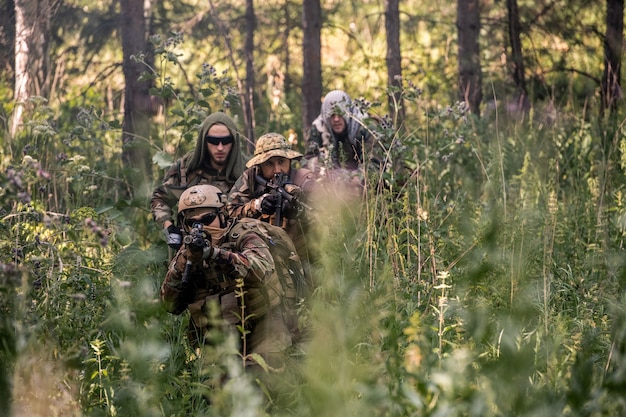
Gear That Helps (and Gear That Hurts)
Do:
- Proper boots: ankle support, grippy soles, flexible toe box. Break them in.
- Socks: moisture-wicking, padded in high-wear areas.
- Well-fitted plate carrier and tight pack; use chest rigs for immediate access.
- Shock-absorbing insoles for long marches to reduce fatigue.
Don’t:
- Heavy, stiff boots that restrict ankle dorsiflexion (kill mobility).
- Dangling pouches, loose straps, and noisy buckles — they disrupt balance and give you away.
- Overloaded packs — if you can’t move efficiently, you need to trim weight.
Movement Types & Tactical Application
1. Patrol Walk / Low-Profile Movement
- Slow, measured steps. Keep knees loose to absorb uneven ground.
- Eyes scanning while maintaining a natural gait.
2. Bounding & Cover-to-Cover
- Short explosive bounds from one covered position to another.
- Plant foot slightly downhill or into the cover to stabilize on arrival; always control the deceleration.
3. Sprint Under Load
- Use short bursts (10–30m) with high cadence.
- Lean slightly forward; pump arms for momentum but keep weapon control in mind.
4. Crawl & Low Crawl
- Tight, deliberate chest/low crawls for concealment.
- Use forearms/feet to propel; keep movements minimal and rhythmic.
5. Lateral Movement & Angling
- Side steps and angled approaches reduce exposure; step small and maintain eye contact with the threat.
- Use rear foot to push and stabilize—never cross feet when moving laterally.
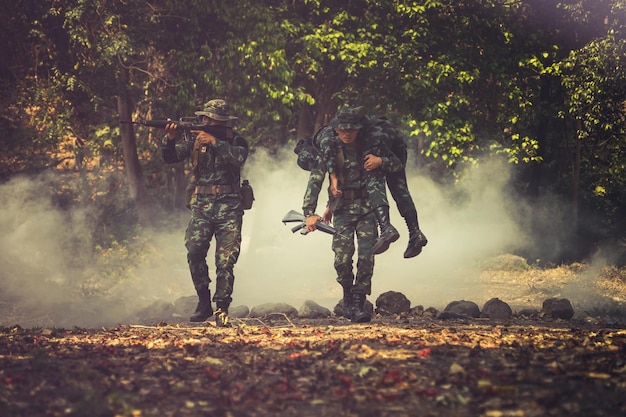
Drills to Build Speed, Stability & Skill
Train these weekly. Start unloaded, add weight progressively.
Drill A — Short-Strides Cadence Drill
- 50m course: run with 2:1 stride ratio (short quick steps).
- Focus: cadence, balance, forefoot strikes.
- 6 repeats with 1 min rest.
Drill B — Loaded Cone Shuttle
- 4 cones set 10–20m apart; run cone-to-cone carrying pack.
- Upon arrival at each cone perform: 3 squats + 1 functional throw (simulate handing off/throwing gear).
- Builds acceleration, braking, and transition under load.
Drill C — Lateral Agility Under Load
- Ladder or taped boxes: lateral step through while wearing plate carrier.
- Keep hips low; work on hip stability and foot placement.
Drill D — Reactive Surface Training
- Create mixed terrain course (gravel, logs, sand) — run and navigate obstacles while carrying weight.
- Focus on foot placement, scanning, and controlled recovery.
Drill E — Eccentric Strength & Balance
- Bulgarian split squats, single-leg deadlifts, step-downs — build joint stability for one-leg landings and uneven ground.
Conditioning & Strength Work
- Squats & deadlifts: build the posterior chain for carrying heavy loads.
- Farmer carries: great for grip, core, and gait under asymmetrical load.
- Hill sprints with pack: improves cardio and leg power for ther sprint-bursts.
- Plyometrics (low-impact): box step-downs and low box jumps for reactive strength—keep them controlled to avoid injury.
Mobility & Pre-Movement Routine
Before ops, do a short routine (5–10 minutes):
- Ankle circles & dorsiflexion drills — increase ankle mobility.
- Hip openers & dynamic lunges — free hip rotation.
- Band-resisted lateral steps — prime glutes and hip abductors.
- Short jog & high-cadence strides — groove the nervous system.
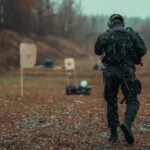
Tactical Footwork for Shooters
- Stable shooting stance on the move: step-stop-shoot — step, plant, stabilize, and fire (short-range ops).
- Index your grip & weapon mount so transition between moving and firing is smooth.
- Recoil control & gait: practice controlled breathing and recoil management immediately after each shot—don’t let footwork collapse your firing platform.
Environmental Considerations
- Wet surfaces: shorten stride, lower center of gravity, increase contact surface of foot.
- Snow/ice: micro-step, keep weight over planting foot. Consider microspikes or crampons.
- Loose sand: slower, higher cadence; plant foot flat to push off.
- Urban terrain: expect sudden elevation changes—scan floors for glass, cables, and trip hazards.
Common Mistakes (and How to Fix Them)
Mistake: Overstriding
- Fix: shorten steps, increase cadence. Practice metronome runs.
Mistake: Eyes down on feet
- Fix: practice peripheral foot placement drills—look up, feel ground with light steps.
Mistake: Loose, noisy gear
- Fix: secure straps, use elastic retention, trim unused pouches.
Mistake: Bad pack fit
- Fix: reposition load; heavier items close to spine; chest strap engaged; hip belt used.
Mistake: No shock absorption
- Fix: use proper insoles, strengthen posterior chain, plan rest/walking cycles.
Recovery & Injury Prevention
- RICE for acute ankle sprains (rest, ice, compression, elevation) and seek professional care for suspected fractures.
- Daily mobility & foam rolling to prevent tight hips/calves.
- Active recovery: low-impact cardio and mobility on off-days to maintain blood flow without pounding joints.
Sample 8-Week Tactical Footwork Plan (Progressive)
Weeks 1–2: Unloaded technique focus (cadence, stride, mobility).
Weeks 3–4: Introduce light pack (10–15% BW), add basic drills (cone shuttle, ladder).
Weeks 5–6: Increase pack weight (20–30% BW), add reactive surface and sprint bursts.
Weeks 7–8: Heavy simulation (plate carrier or mission load), full course with obstacles and lateral/agility work. Test with timed runs & stability tasks.
Mental Game & Decision-Making Under Load
- Simplify choices: when moving under stress, break movement into rhythm (step-step-step-scan).
- Pre-plan routes: minimize surprise terrain; pick lines of movement before you move.
- Trust training: under stress you’ll default to practiced mechanics—make them good.
Real-World Scenarios & Tips
- Vehicle exit with gear: step down leading with strong leg, keep pack close to chest when dismounting.
- Fast breach to cover: short explosive bounds to pre-selected barriers; plant feet and control deceleration on impact.
- Crowd movement (urban exfil): smaller steps, low profile, stay with buddy to avoid isolation.
Final Thoughts
Tactical footwork is a system—technique, gear, conditioning, and mindset. Train smart, start light, then add load. Drill the basics until they’re automatic, and you’ll move faster, safer, and more effectively under any weight. Remember: it’s not how fast you can run once — it’s how fast you can run all day while staying stable and making good choices.