

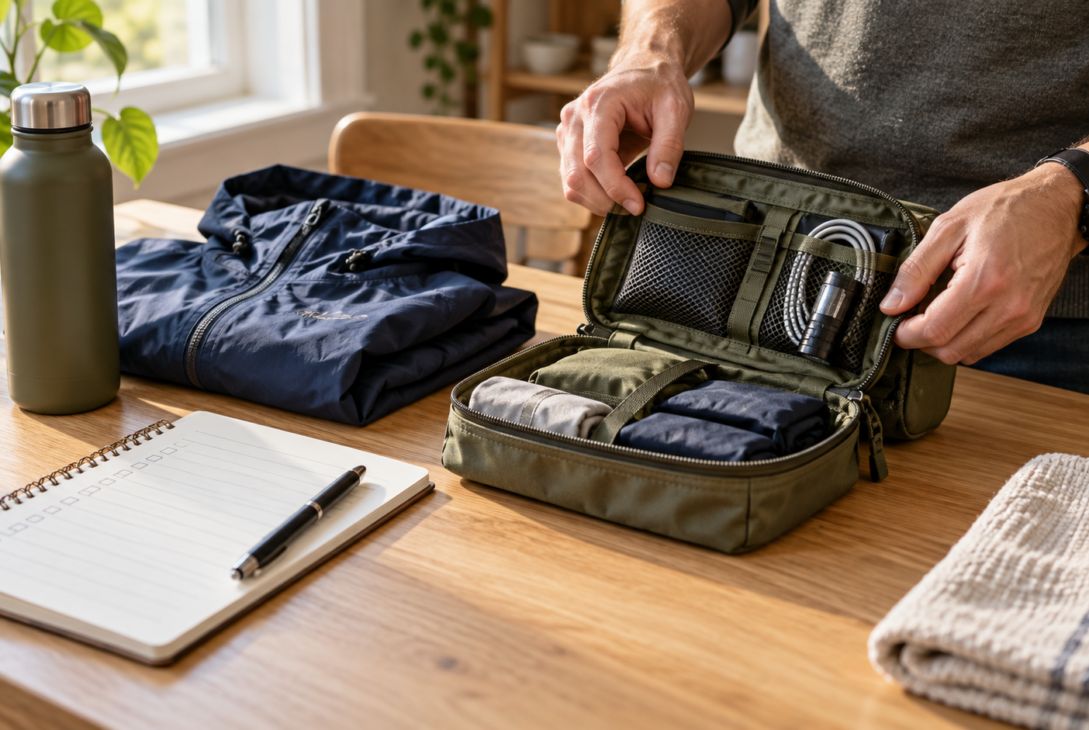
The flashlight helped during a garage repair. The charging cable went on a weekend trip. Someone took the spare rain jacket to a game.
None of those choices was unreasonable. But the emergency kit now contains an empty pocket, a partially used power supply, and a note nobody remembers writing.
Emergency kit maintenance often begins with ordinary household borrowing. A kit can look familiar while quietly losing the combinations that make its contents useful.
A reset routine closes that gap. After equipment or supplies are used, identify what changed, restore what belongs there, and make unresolved tasks visible.
Treat Every Use as a Change to Review
An item does not need to be damaged or completely consumed to require attention.
A device may have been returned without its accessory. A sealed product may now be open. A pouch may have moved to another bag, or the person borrowing it may have changed its settings.
Ask a more useful question than “Did it come back?”: “Is the whole setup back in the condition and location the plan expects?”
That question connects maintenance to actual use rather than appearance.
Write Down What the Kit Is Supposed to Contain
A reset needs a reference. Create a short inventory of the supplies your household has deliberately chosen for that kit.
For each entry, include its location and any essential accessory. “Phone charging setup” is clearer when it identifies the compatible cable as well as the charger.
Keep required product instructions available. Where individual storage, handling, or care requirements apply, record where those instructions can be found rather than inventing one maintenance rule for every item.
An inventory is not a universal shopping list. Your wider preparedness plan still needs to address quantities, individual needs, and local circumstances.
Give Each Item One Clear Status
Avoid using “checked” for equipment you have merely seen inside the bag.
Instead, use plain status descriptions that explain what remains to be done:
- Returned: Back in its assigned location; further checks may still be needed.
- Needs attention: Missing an accessory, due for appropriate care, or otherwise unresolved.
- Ready for its assigned task: Relevant checks have been completed under its instructions.
- Removed from use: Not to be relied on until appropriately replaced or assessed.
These are editorial inventory labels, not safety certifications. Marking an item ready does not establish performance under every condition.
Check the Complete Combination
Focus on dependencies that can disappear during borrowing.
Does the flashlight have the power supply specified by its manufacturer? Is the charger paired with a cable that fits your current phone? Did the rain jacket return dry and in suitable condition for storage?
Follow each product’s instructions for inspection, cleaning, charging, and storage. Do not improvise battery combinations, repairs, or charging arrangements simply to clear a task from the list.
For medical or special-care supplies, follow the specific professional and product guidance that applies. A general reset checklist cannot determine whether those items remain suitable.
Separate Restocking From Repacking
Putting the remaining contents neatly into a bag can hide what is missing.
First compare the contents with the reference inventory. Identify used, opened, missing, or changed items. Decide what needs replacement or appropriate review.
Then repack the kit so the intended users can find supplies consistently. Avoid filling an empty compartment with unrelated equipment merely because the space is available.
If a replacement differs from the original, check its instructions and compatibility before treating it as equivalent. A new model, package size, or connector may change how the kit works.
Use a Small Reset Worksheet
| Item or setup | What changed? | Action needed | Owner | Status |
|---|---|---|---|---|
| Flashlight | Used during a repair | Follow power and condition checks in its instructions | Assigned person | Record result |
| Charging setup | Cable borrowed | Return and verify compatible accessory | Assigned person | Record result |
| Rain protection | Used outdoors | Follow drying and care instructions before storage | Assigned person | Record result |
| Packaged supply | Opened or consumed | Follow handling directions and replace as needed | Assigned person | Record result |
| Contact information | Household detail changed | Update the relevant copy | Assigned person | Record result |
These rows are examples, not completed inspection results. Replace them with observations from your actual kit.
Make Unfinished Work Visible
A missing item is easier to address when its status is clear.
Keep a short task list with the action, responsible person, and a reasonable follow-up point. If an important need remains uncovered, make sure the people relying on the kit know that limitation and have an appropriate alternative plan.
Do not display sensitive details on a visible inventory. A label can say “personal supplies need review” without exposing medical information or access credentials.
When an item is unsuitable or damaged, separate it appropriately so nobody mistakes it for equipment ready to use. Follow manufacturer and local guidance for handling or disposal where needed.
Keep Borrowing Easy to Report
A complicated sign-out system may be ignored for a small household kit.
Choose a simple method people will use: a note in the inventory, a household message, or an agreed reminder to the person maintaining the kit.
Make the return step explicit. The person borrowing an item should report what was used, what changed, and whether any accessory remains elsewhere.
The aim is accurate information, not blame. If household members hide borrowing to avoid criticism, the inventory becomes less useful.
Review Changes Beyond Borrowing
Some gaps appear even when nobody opens the bag.
A different phone can make a cable obsolete. A changed care need can alter personal supplies. A new storage location can introduce conditions the original arrangement did not account for.
Use those events as reasons to review the affected items. Continue to follow relevant product inspection and replacement guidance between uses.
A reset after borrowing complements maintenance; it does not replace every scheduled or product-specific check.
Close One Gap Today
Choose one piece of equipment your household recently borrowed. Find the item, its accessories, and its assigned storage location.
Check what changed and complete the appropriate care or replacement steps. If something remains unresolved, record it plainly.
A useful emergency kit is an arrangement people can understand and maintain. Returning an item is the beginning of the reset; restoring its intended function is what completes it.