


In any crisis, we often focus on the physical—shelter, food, water. But whether you face the literal isolation of the wilderness or the emotional isolation of a prolonged challenge, the most critical battle is fought within the mind. Psychological Survival hinges on managing two powerful, destructive forces: the crushing weight of isolation and the corrosive nature of hopelessness.
This is the map for navigating the inner landscape when the external world offers no comfort.
1. 🚶 Defeating Isolation: The Power of Ritual and Schedule
Isolation strips away structure, which is vital for mental health. The key to surviving it is to impose a rigid, self-generated routine that replaces external social cues.
A. The Three Pillars of the Day
Establish a mandatory schedule that must be adhered to, regardless of mood or perceived energy level. This creates a sense of purpose and control.

- Work/Mission Time: Dedicate a specific block (e.g., 9:00 AM to 12:00 PM) to productive activity—searching for resources, solving a problem, or learning a new skill. This maintains a sense of competence.
- Physical Time: Dedicate a block to movement (e.g., 4:00 PM to 5:00 PM)—stretching, walking, or calisthenics. This releases endorphins and prevents the body from succumbing to lethargy.
- Maintenance/Grooming Time: Dedicate time to personal hygiene and maintaining your environment. In isolation, a daily shave, brushing your hair, or tidying your space is not vanity; it is a commitment to life and a rejection of the slide into despair.
B. The Internal Conversation (Journaling)
Journaling transforms a chaotic internal monologue into a structured dialogue. Write down your mission objectives, your perceived failures, and your emotional state. This externalizes the internal struggle, making it manageable and less overwhelming. It is the practice of becoming your own best companion.
2. 🎯 Combating Hopelessness: Anchoring to Small Victories
Hopelessness stems from the feeling that the goal is too large, too distant, and entirely out of reach. The remedy is to break the vast problem into tiny, achievable, and repeatable tasks.
A. The “Three-Task Rule”
Every morning, before beginning the day, identify only three critical, achievable tasks that, when completed, constitute a win.
- Example in Physical Survival: 1) Secure 1 gallon of water. 2) Check the integrity of the shelter roof. 3) Split 5 pieces of firewood.
- Example in Emotional Isolation: 1) Write two pages in the journal. 2) Do 20 minutes of stretching. 3) Plan a budget for next month.
The feeling of Mastery derived from completing these small tasks is a powerful neurochemical antidote to hopelessness. It reminds the brain: I am capable. I can control something.
B. Finding Meaning in the Present (The Next Step)
Hopelessness is often rooted in the fear of the unknown future. The psychological survivor ruthlessly confines their thoughts to the present.
- Focus on the immediate next step. If you are hungry, focus not on the vastness of the forest, but on the three steps required to set the snare.
- Practice Gratitude for the Basics: Consciously acknowledge the small things you do have: the warmth of the fire, the taste of clean water, the intactness of your shelter. This shifts the mind’s focus from deficiency to resourcefulness.
3. 🧩 The Core Mental Frame: Acceptance and Purpose
The final pillar of psychological survival is adopting a frame of mind that accepts reality without surrendering the will to live.
- Acceptance: Stop fighting the reality of the situation. Accept that the isolation or the difficulty is the new norm for now. Fighting reality drains energy you need for survival.
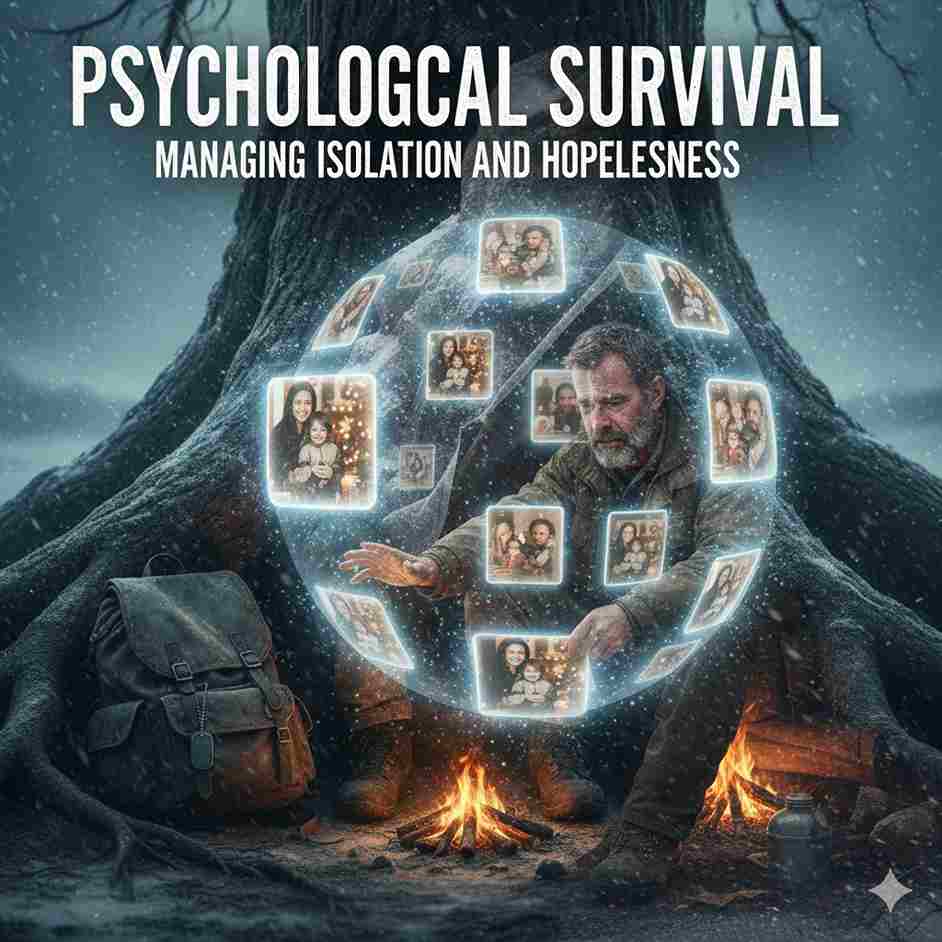
- Purpose Beyond Self: In isolation, the will to survive is strongest when it is tied to something outside of oneself—a family member you must return to, a team you must rejoin, or a story you must live to tell. This Transcendence of Self transforms suffering from meaningless pain into a purposeful trial.
Psychological survival is not about being tough; it is about being smart, disciplined, and focused on maintaining your internal world. It is the ultimate act of self-leadership.