
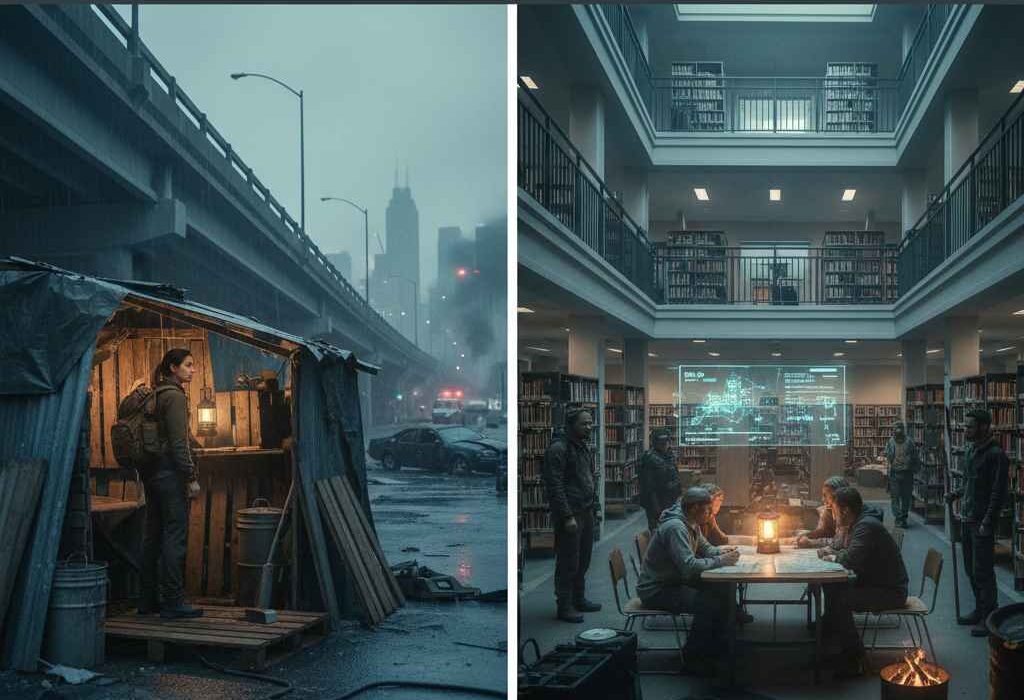
When disaster strikes in the city—whether it’s a blackout, earthquake, riot, or terrorist attack—finding safe shelter becomes the first priority. Unlike the wilderness, where nature provides raw materials for shelter, the urban environment is full of concrete, steel, and chaos. Survival in the city requires quick thinking, adaptability, and the ability to spot safe zones in an unpredictable environment.
Why Shelter Matters in Urban Survival
In cities, danger can come from multiple sources at once: collapsing buildings, broken glass, fires, flooding, or even hostile crowds. Without proper shelter, you’re exposed to physical threats, harsh weather, and unsafe encounters. The challenge isn’t just finding shelter—it’s choosing one that won’t put you in greater danger.
Best Shelter Options in Urban Disasters
1. Abandoned or Vacant Buildings
- Pros: Ready-made walls and roofs, protection from weather.
- Cons: Risk of structural damage, looters, or hidden hazards.
- Tip: Choose buildings with multiple exits in case you need a quick escape.
2. Subterranean Spaces
- Examples: Basements, subways, parking garages.
- Pros: Strong protection from storms, falling debris, or explosions.
- Cons: Risk of flooding, poor air circulation, and potential for being trapped.
- Tip: Always note secondary exits before committing to underground shelter.
3. Public Facilities
- Examples: Schools, libraries, office buildings.
- Pros: Often reinforced, spacious, and stocked with supplies.
- Cons: May become overcrowded or targeted for resources.
- Tip: Arrive early—these spaces fill up fast during emergencies.
4. Rooftop Shelters
- Pros: Good visibility, escape from ground-level chaos.
- Cons: Exposed to weather, limited supplies, difficult escape routes.
- Tip: Only use as temporary shelter or observation points, not long-term living.
5. Improvised Shelters
- Examples: Tents, tarps, vehicles, shipping containers.
- Pros: Flexible, mobile, and quick to set up.
- Cons: Minimal protection from major hazards.
- Tip: Combine with natural cover (walls, alleys, fences) for added security.
Key Shelter Safety Rules in Cities
- Stay hidden: Bright lights, noise, or smoke can draw unwanted attention.
- Think defensively: Choose shelters with solid doors, locks, or natural barriers.
- Avoid obvious targets: Gas stations, malls, and government buildings may attract looters or authorities.
- Stay mobile: Urban survival often means moving between shelters as situations change.
Final Thoughts
In urban disasters, shelter is the thin line between safety and vulnerability. The best survivors aren’t the ones who build elaborate hideouts—they’re the ones who spot and adapt to safe spaces quickly. Whether it’s a basement, an abandoned office, or a temporary rooftop refuge, choosing the right shelter in the city can mean the difference between life and death.